 Volume One
Baby book ideas for the first year, month by month
A baby book is a year of small chapters, not one big project. What to keep from each month of the first year, from the hospital wristband to the birthday cake, and how to do it in three seconds a day.
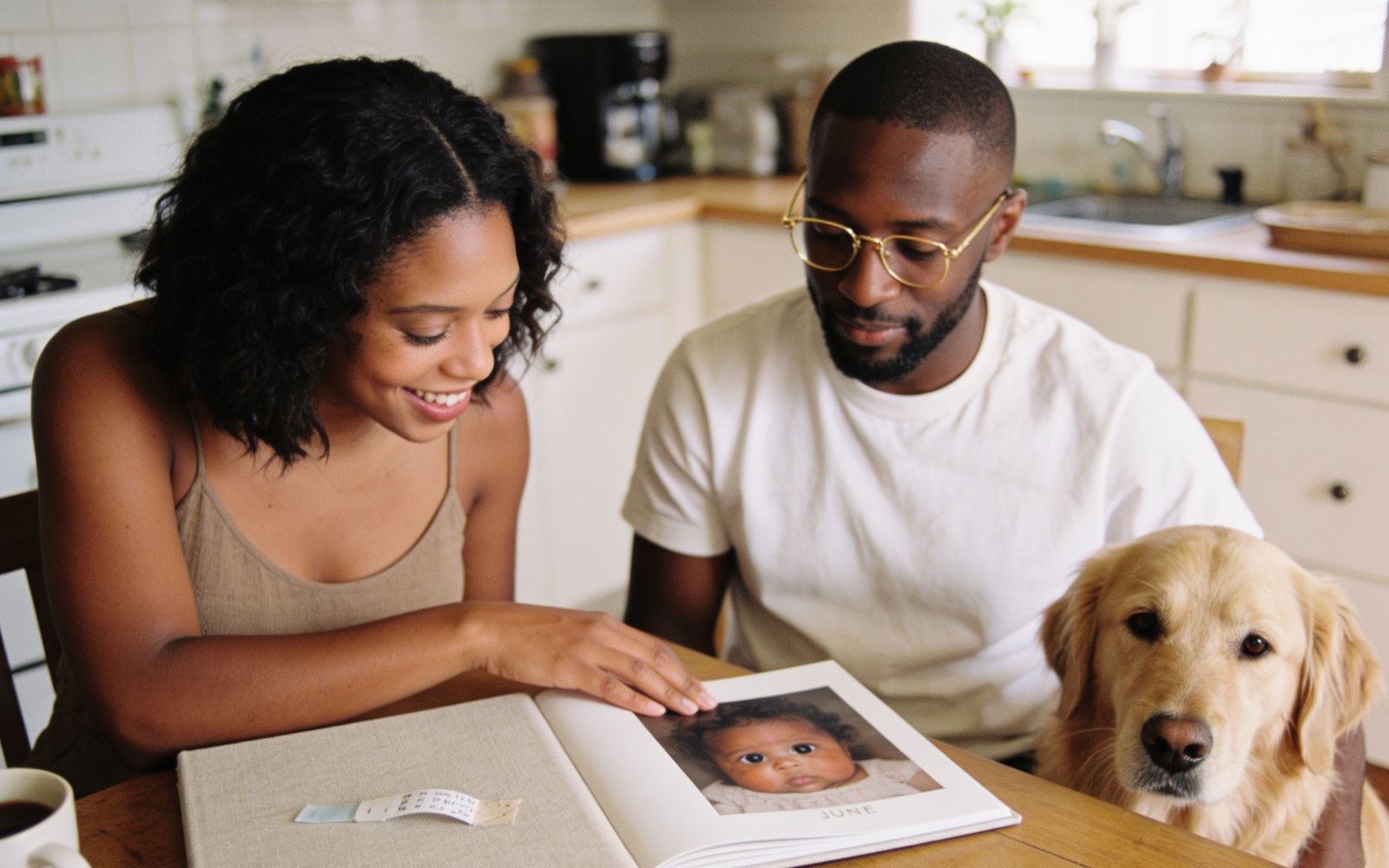
The best first-year baby books are not scrapbooks. They are twelve short chapters, each with three or four photographs, a few true sentences, and one real thing from the month: a wristband, a ticket, a recording of a laugh. Below is a month-by-month list of what is worth keeping. None of it needs an evening. Most of it needs a phone and a sentence.
Before the birth
Keep the things that will be gone in a week: the hospital bag list, the name shortlist with the ones that lost, the last photograph of the nursery before it was used for anything. If you have a sonogram, keep one, not seven.
The first two weeks
- The wristband. Photograph it flat on a plain surface the day you get home. It is the single most-touched page in any baby book.
- The arrival line. Time, weight, the first thing anyone said. One sentence.
- The first visitors. Who came, what they brought, what they said about the ears.
- The parking ticket, the receipt, the card. Keepsakes are the texture of a book; a scanned card that came with the flowers says more than a caption.
Month one
- The 3 a.m. sentence. Whatever you said to each other at 3 a.m. Write it down before Thursday.
- The hands. A photograph of a hand around a finger. Everyone takes one; everyone is right to.
- A voice note. Thirty seconds of the sounds they make. In a printed book like Volume One that recording plays from a code on the page; in any book, it is worth keeping somewhere dated.
- Who they look like this week. It changes. Record the opinion, dated, so the argument is preserved.
Month two
- The first smile at a person. Who got it.
- The first laugh. What caused it. It is almost always something falling.
- The bath face. Skeptical, usually.
- The walk. The route you take when nothing else works. A photograph of the street at the hour you take it.
Month three
- Hands, discovered. The week they find their own hands and study them like a manual.
- The first long sleep. The one that frightened you.
- A grandparent's words. Exact, from a call. Better still, let the grandparent write them into the book themselves.
Months four and five
- The first food. The face, the tray, the ceiling. Keep the verdict.
- The good bib. Every family has one that retires after a single outing.
- The reach. Where they get to in the minute you leave the room.
- The furies. What made them furious this week. It is a good list to read later.
Months six to eight
- Sitting up, surprised. They look around like they have been promoted.
- The object. The one they will not be parted from. Photograph it alone, like a portrait.
- The first of something outside. Sea, snow, sand, rain on the face.
- What they say to the dog. Or the cat. Or the ceiling fan.
Months nine to twelve
- The first word, and the dispute. Record both sides.
- The route. Crawl, cruise, walk: the path through the house, ideally in the same photograph frame each month.
- The handing over. Whatever they hand you, again and again.
- The cake. Before, during, after.
- A letter. One paragraph to the person they will be, written by the person you are on the last night of the first year.
Three ideas that make the whole book better
Keep the words, not just the photographs. Every family has a thousand photographs of the first year and almost no sentences. The sentences are what the grown child reads twice.
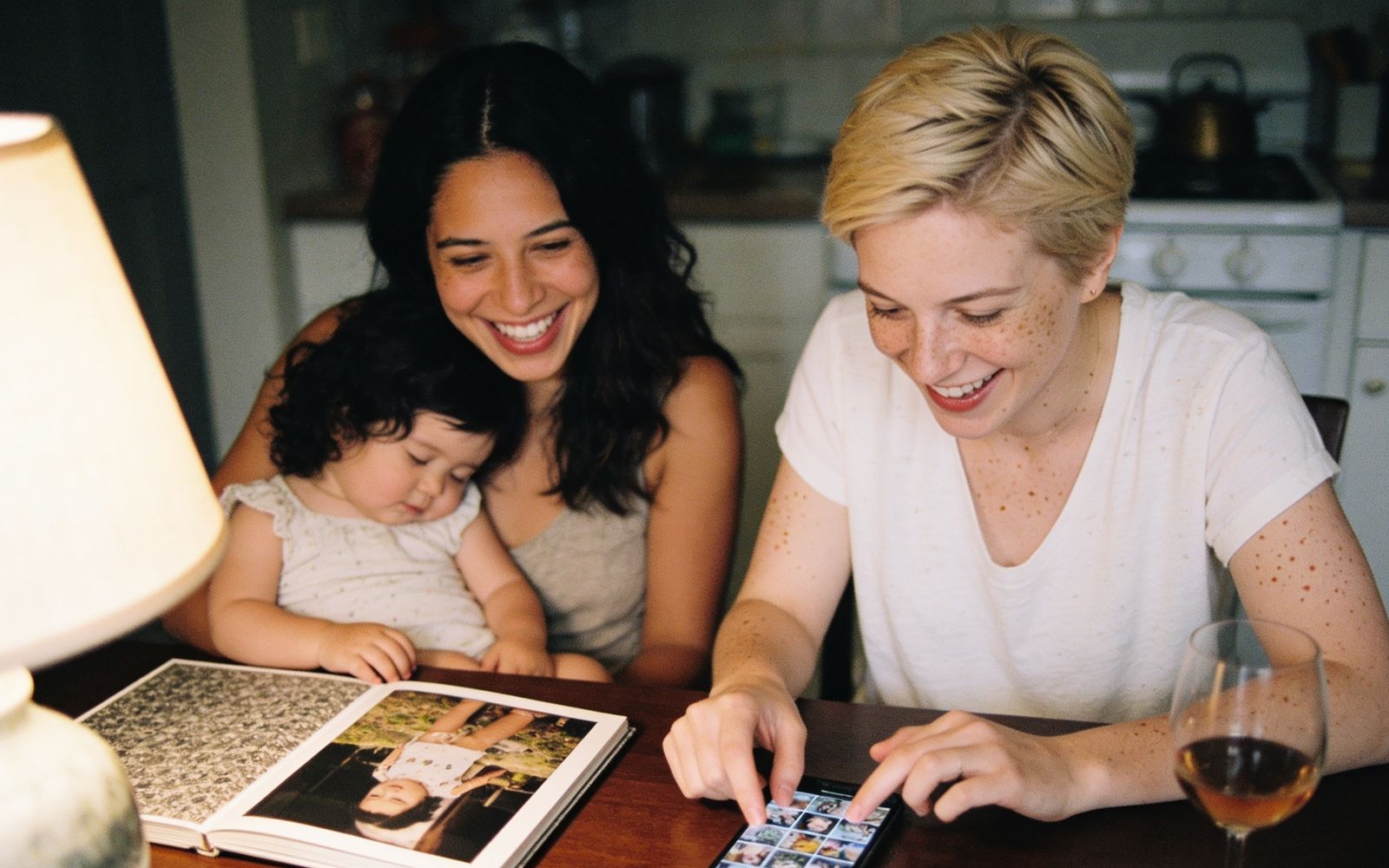
Print it. A book on a phone is a folder. A book on a shelf gets opened at bedtime, taken to grandparents, and read at twenty. Choose a layflat binding if you can, so a photograph can run across both pages and nothing sinks into the fold.
Let it finish itself. The reason baby books stop at month three is that the blank page asks for an evening. A book that asks a question by text, drafts the month from your answers and lays out the pages while you sleep is a book that gets to month twelve. That is the whole idea behind Volume One, and it is why the page count is the only number we show.